"
Projects often don't just go wrong; they start wrong. The seeds of failure are often sown right at the beginning, leading to problems later on. Recognising this, successful project leaders invest in thorough planning and simulation upfront, understanding that a project's success is largely determined by how it starts.
— Bent Flyvbjerg
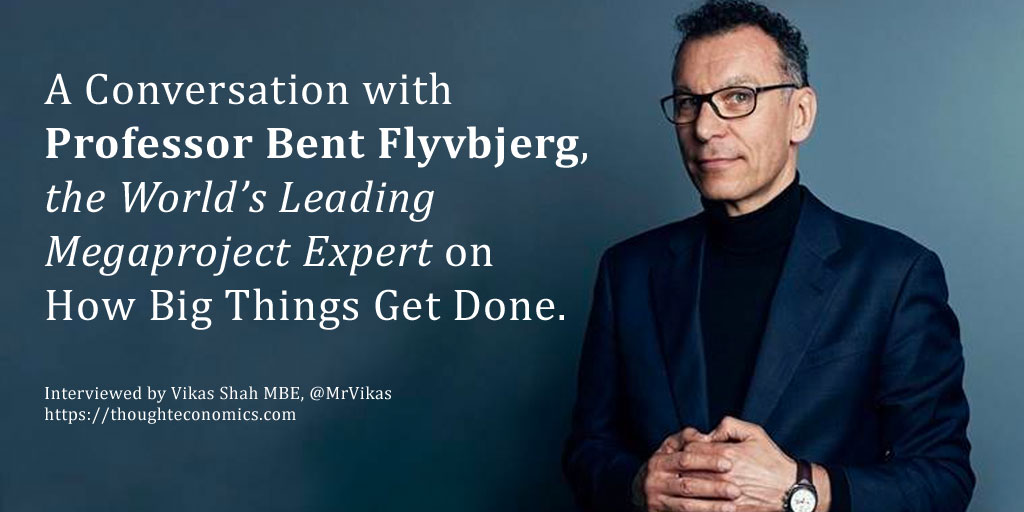
Leading researcher on megaprojects, planning, and governance expert
"
The greatest risk often lies in people's biased perceptions of risk itself. These biases, both psychological and political, tend to lead to a dangerous underestimation of risk. Our advice, backed by data and methodologies we've developed, is focused on debiasing risk.
— Bent Flyvbjerg
Leading researcher on megaprojects, planning, and governance expert
"
They should foster a culture where bad news is welcomed, not just good news. Unfortunately, many leaders shy away from negative updates. However, if a leader inadvertently suppresses bad news, creating a culture where the messenger is punished, it results in a dysfunctional governance structure.
— Bent Flyvbjerg
Leading researcher on megaprojects, planning, and governance expert
"
While optimism is essential and beneficial in many aspects of life, it can become a hindrance in the realm of large-scale, costly projects. As highlighted in our book, misplaced optimism in multi-billion-dollar investments is particularly problematic. It often signals impending financial shortfalls.
— Bent Flyvbjerg
Leading researcher on megaprojects, planning, and governance expert
"
They don't just dive into a project; they begin by exploring its purpose. If they're working with a client, their first question is often, 'Why are you undertaking this project?' They don't move forward until they have a clear understanding of this 'why', dedicating considerable time to uncover its various facets.
— Bent Flyvbjerg
Leading researcher on megaprojects, planning, and governance expert
"
Only 8.5% of projects meet or exceed their time and budget expectations. This means that a staggering 91.5% fail to stay within budget or meet deadlines. However, the situation becomes even more pronounced when we consider the primary goal of these projects: delivering promised benefits. Shockingly, a mere 0.5% achieve this goal within the allocated budget and timeframe.
— Bent Flyvbjerg
Leading researcher on megaprojects, planning, and governance expert
"
Top leadership must take an active interest in projects. They should foster a culture where bad news is welcomed, not just good news. If a leader inadvertently suppresses bad news, it results in a dysfunctional governance structure.
— Bent Flyvbjerg
Leading researcher on megaprojects, planning, and governance expert
"
The greatest risk often lies in people's biased perceptions of risk itself. The challenge is: how do you debias risk when everyone's perception of it is inherently biased?
— Bent Flyvbjerg
Leading researcher on megaprojects, planning, and governance expert
"
They don't just dive into a project; they begin by exploring its purpose. This 'why' acts as a North Star, guiding every phase of the project. Having this North Star makes the process more efficient and significantly increases the likelihood of delivering the project effectively.
— Bent Flyvbjerg
Leading researcher on megaprojects, planning, and governance expert
"
While optimism is essential and beneficial in many aspects of life, it can become a hindrance in the realm of large-scale, costly projects. Misplaced optimism in multi-billion-dollar investments is particularly problematic. It often signals impending financial shortfalls.
— Bent Flyvbjerg
Leading researcher on megaprojects, planning, and governance expert
"
Only 8.5% of projects meet or exceed their time and budget expectations. This means that a staggering 91.5% fail to stay within budget or meet deadlines. However, when we consider delivering promised benefits, a mere 0.5% achieve this goal within the allocated budget and timeframe.
— Bent Flyvbjerg
Leading researcher on megaprojects, planning, and governance expert