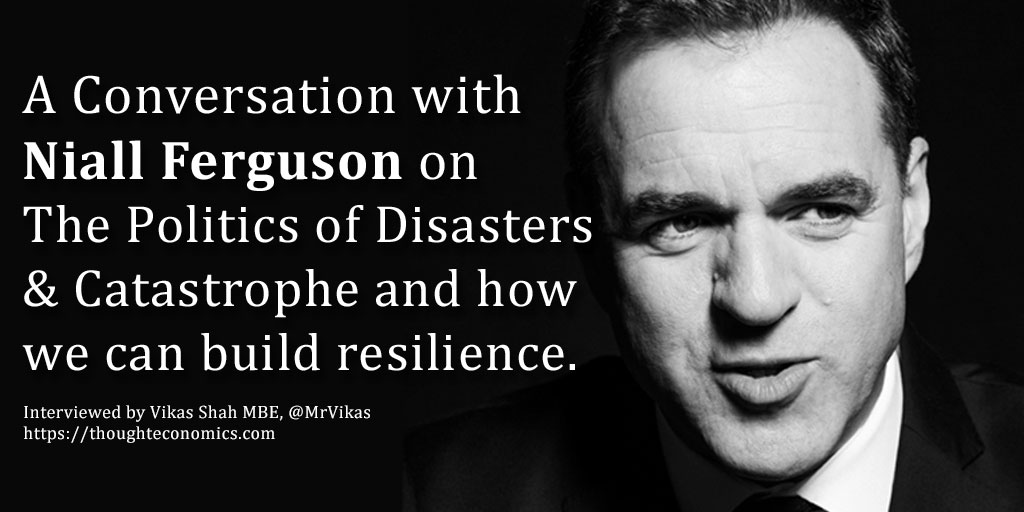
Disasters are inherently hard to predict. But when catastrophe strikes, we ought to be better prepared than the Romans were when Vesuvius erupted or medieval Italians when the Black Death struck. We have science on our side, after all. Yet the responses of many developed countries to a new pathogen…
Thought Economics


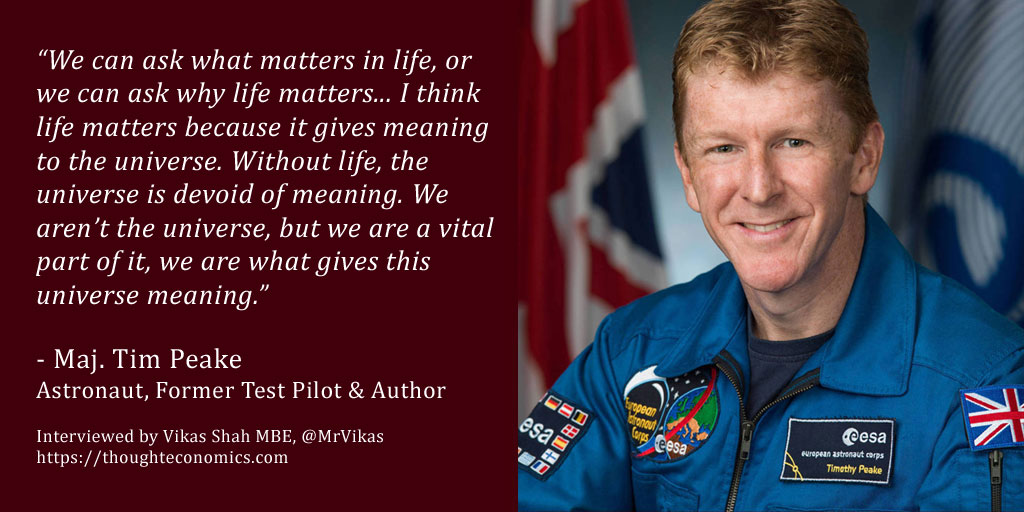
Tim Peake is a former Apache pilot, flight instructor, test pilot and current European Space Agency astronaut. A veteran of eighteen years military service, Tim has flown over 3000 hours on operations worldwide. In December 2015, Tim became the first British astronaut to visit the International Space Station and conduct…
Thought Economics


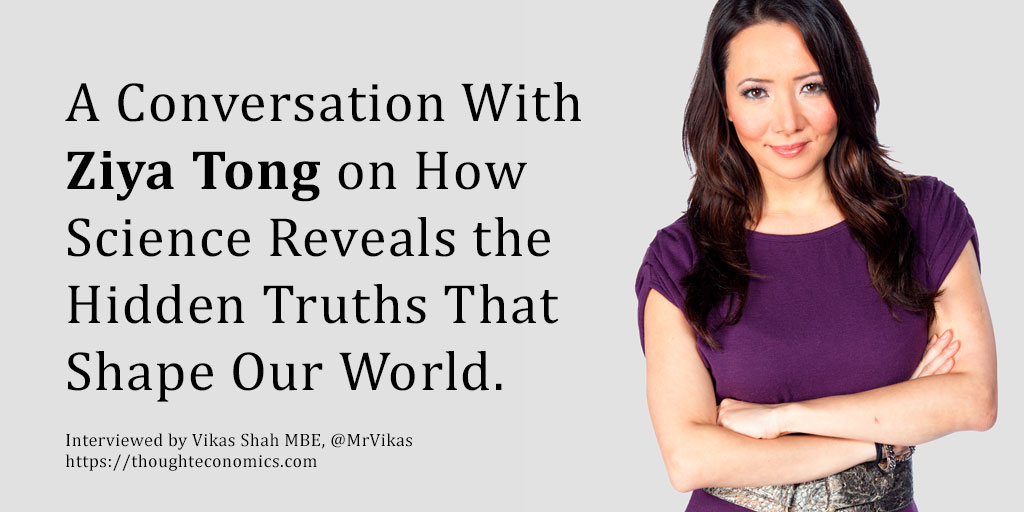
Ziya Tong is one of the world’s most engaging science journalists. In her new book, The Reality Bubble she takes a ground-breaking look at the hidden things that shape our lives in unexpected, dangerous and profound ways. Ziya Tong serves on the Board of the WWF, and is Vice Chair…
Thought Economics


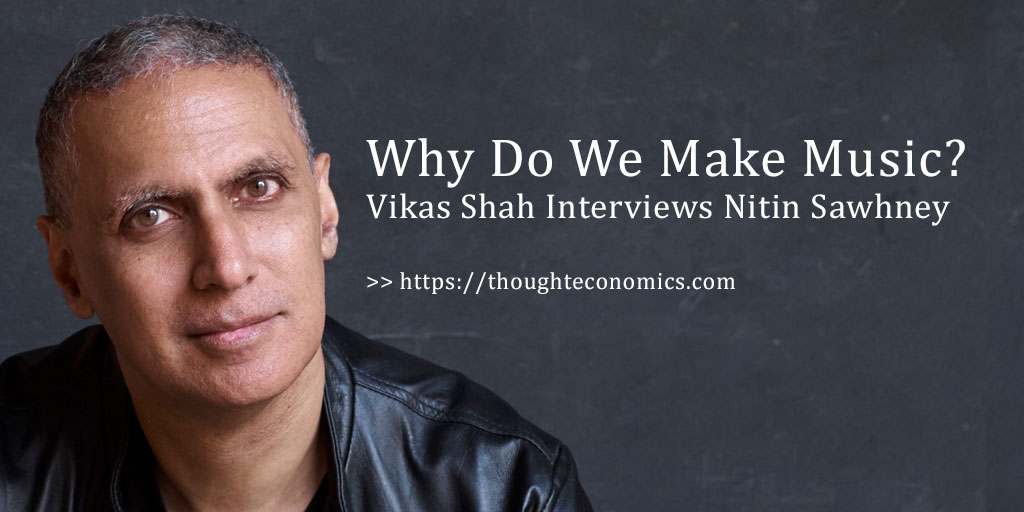
Nitin Sawhney CBE, recipient of the Ivor Novello 2017 Lifetime Achievement award, is one the most distinctive and versatile musical voices around today. Sawhney has recorded multiple albums, film soundtracks and compilations, encompassing over 60 film and TV scores and is established as a world-class producer, songwriter, touring artist, BBC…
Thought Economics


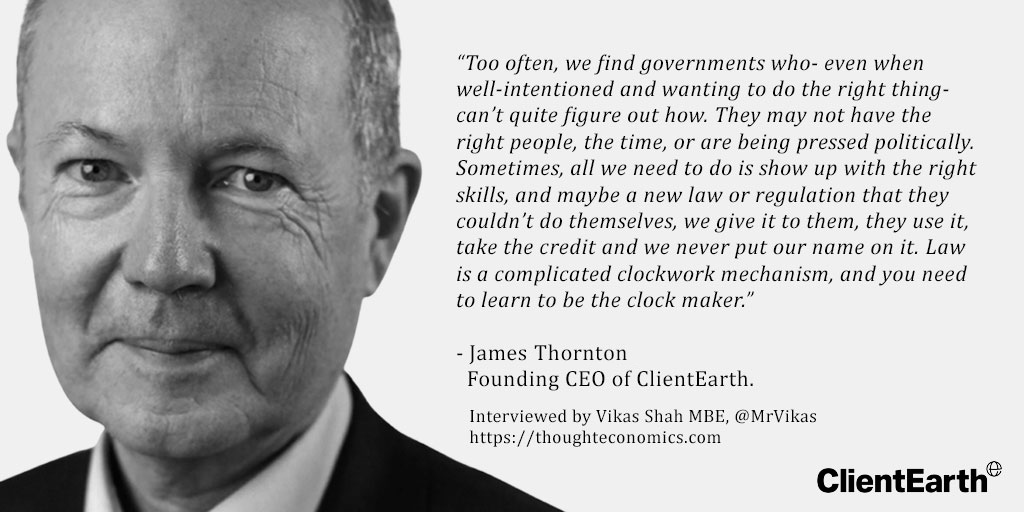
James Thornton is a remarkable individual who has dedicated his life to fighting for climate and environmental justice. As a Wall Street lawyer, he won over 80 cases to force the Reagan Administration to clean up polluted water. It was in 2007, when he moved to Europe that ClientEarth was…
Thought Economics


The philosophy of science has sought to introduce order into the chaos of existence by replacing supernatural and mystical with reason, logic and frameworks. Like most of our progress as a species- this isn’t a smooth curve, but unpredictable leaps forward in our knowledge that create platforms from which humanity…
Thought Economics


As society has moved through the renaissance into modernity, the questions of why (typically the domain of theology) moved from the arts to science, the preciseness of the latter arguably unsuited to such philosophical questions.  The primacy of overtly scientific approaches to understanding life has come at a tremendous cost;…
Thought Economics


Research has shown that evolution has created the psychological mechanisms which have enabled, and emboldened the spread of faux-intellectual movements (anti-vaccination, climate-deniers) and which can explain most of our deep rooted preferences, beliefs, and consumption instincts. To learn more, I spoke to Dr. Gad Saad a professor, evolutionary behavioural scientist,…
Thought Economics


Referred to as “the most famous astronaut since Neil Armstrong,” Colonel Hadfield was selected as a NASA Mission Specialist, and three years later he was aboard the Shuttle Atlantis, where he helped build the Mir space station. In 2001, on Shuttle Endeavour, Colonel Hadfield performed two spacewalks and in 2013,…
Thought Economics


The Royal Society is a Fellowship of many of the world's most eminent scientists and is the oldest scientific academy in continuous existence. Sitting at the helm of the Royal Society is Dr. Venki Ramakrishnan, a Nobel Prize-winning biologist who is responsible for giving us some of the most fundamental…
Thought Economics


If you are lucky enough to live to 79 (the global average lifespan) you will have spent around 25 of those years (roughly one third of your entire life) asleep. Scientific advances over the past quarter of a century have created a renaissance in sleep research, giving us greater insights…
Thought Economics